Crawlspace Moisture & Water Management Alberta
Moisture Is the Leading Cause of Crawlspace Failure
Water and vapour in a crawlspace don't stay there. They migrate into structural wood, saturate insulation, promote mould, and eventually destroy the framing that holds your floor up. In Northern Alberta, the problem is amplified by spring snowmelt, high water tables in muskeg-heavy terrain, and the condensation cycles that come with extreme temperature swings. Crawlspace moisture management isn't optional — it's the difference between a stable structure and one that deteriorates season by season.
How Moisture Gets Into Crawlspaces
There is rarely a single moisture source in a failing crawlspace. Most situations involve a combination of pathways:
- Ground vapour rising through bare or inadequately protected soil floors — present in virtually all older Alberta crawlspaces
- Surface water infiltrating at the perimeter during spring thaw when ground is still frozen below and saturated above
- Subsurface groundwater under pressure through cracks in perimeter walls or at the wall-floor junction
- Condensation forming on cold structural members when warm air enters from above through gaps in the floor system
- Failed or missing weeping tile that no longer redirects perimeter drainage away from the foundation
- Downspouts or grade directing roof runoff toward the foundation rather than away from it
How We Address Crawlspace Moisture
Moisture Source Assessment
We identify the primary moisture pathway — ground vapour, surface infiltration, subsurface water pressure, or condensation — before recommending any solution. Treating the wrong source wastes money.
Ground Vapour Control
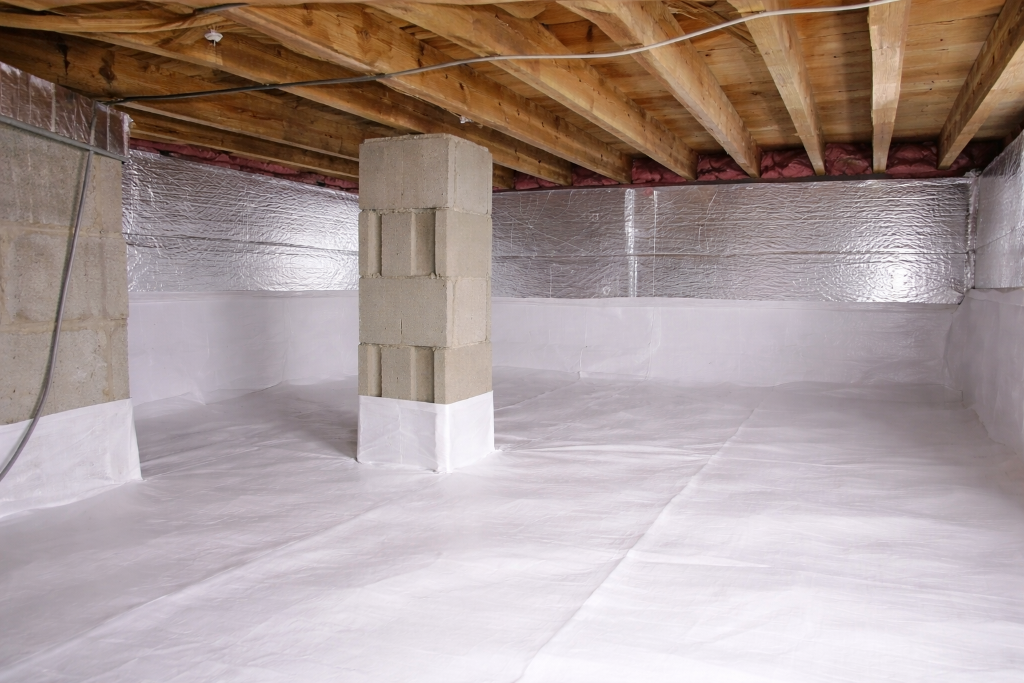
A properly installed vapour barrier on the crawlspace floor is the baseline moisture control measure. We install heavy-mil polyethylene or reinforced encapsulation liner to stop ground moisture migration.
Drainage Correction
Where surface or subsurface water is infiltrating, we address the drainage system: perimeter regrading, weeping tile replacement or extension, and sump pit installation where volume requires it.
Sump Pit Integration
High water table or persistent spring water infiltration requires a properly sized and located sump pit with a submersible pump. We size and install the system to handle the actual water volume being managed.
Ventilation or Air Sealing
Depending on the crawlspace type — vented or conditioned — we address the air movement contributing to condensation. In most Alberta crawlspaces, controlled sealing outperforms open ventilation for moisture management.
What to Expect
Why Choose Homestead Foundation Repair
Frequently Asked Questions
Ready to Fix Your Structure?
Tell us what you're seeing and we'll give you a straight answer. No pressure, no sales pitch.

